Bulk Hiring in Bangladesh | How Companies Hire Faster
Learn how bulk hiring in Bangladesh helps companies recruit sales teams, factory workers, customer service staff, and field employees faster.
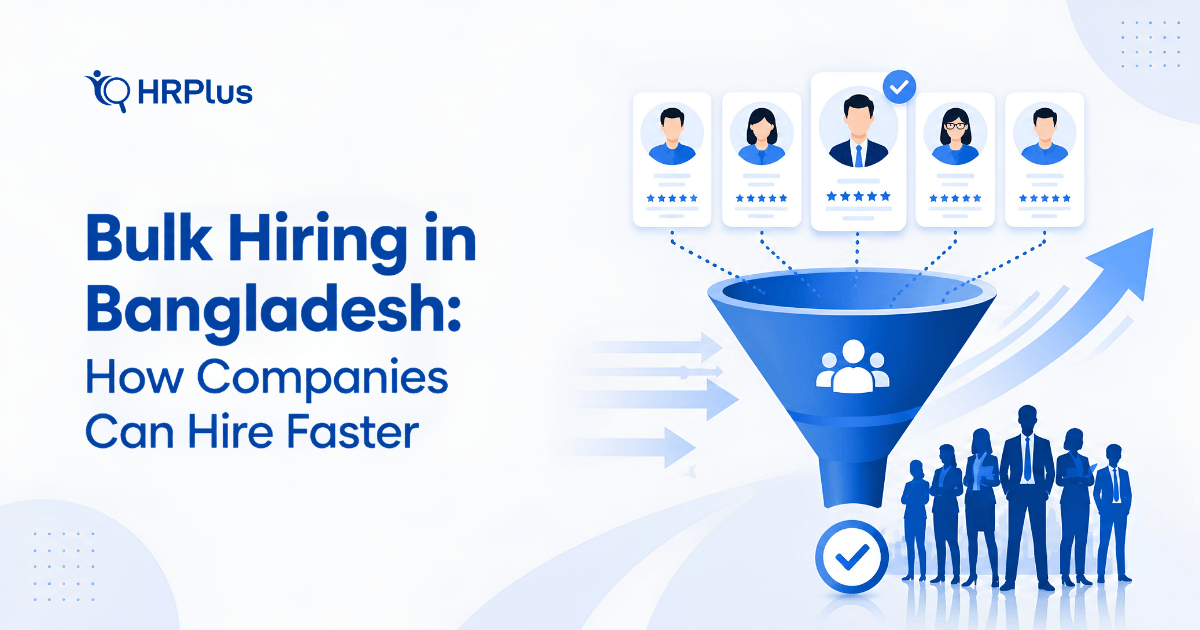
Introduction
Whether you're opening a new factory, expanding retail operations, launching a customer service centre, or rapidly growing a startup, recruiting dozens—or even hundreds—of employees within a short period can become a major operational challenge. This is where bulk hiring in Bangladesh becomes essential.
Unlike traditional recruitment, bulk hiring focuses on filling multiple positions simultaneously while maintaining hiring quality, consistency, and speed. However, without the right recruitment strategy, businesses often face delayed onboarding, inconsistent candidate quality, increased hiring costs, and operational disruptions.
In Bangladesh's competitive labour market, organizations in manufacturing, FMCG, logistics, telecommunications, banking, retail, e-commerce, healthcare, and BPO increasingly rely on structured bulk recruitment processes to secure talent efficiently.
In this guide, you'll learn how bulk hiring works, when businesses need it, common challenges, best practices, and how partnering with an experienced recruitment agency can significantly reduce hiring time and improve workforce quality.
Quick Answer
Bulk hiring in Bangladesh is the process of recruiting a large number of employees within a limited timeframe using a structured recruitment strategy, standardized screening, and coordinated hiring activities.
Key benefits include:
- Faster hiring for large workforce requirements
- Consistent candidate quality
- Reduced recruitment cost per hire
- Better onboarding planning
- Less workload for internal HR teams
What is Bulk Hiring?
Bulk hiring refers to recruiting multiple employees simultaneously for similar or different roles within a defined hiring timeline.
Unlike executive search, which focuses on a few specialized positions, bulk hiring prioritizes speed, scalability, and process efficiency.
Businesses may recruit:
- Production Operators
- Sales Representatives
- Customer Service Executives
- Warehouse Staff
- Delivery Personnel
- HR Executives
- Finance Officers
- Graduate Trainees
- Retail Staff
- Technical Support Teams
When Do Companies Need Bulk Hiring in Bangladesh?
Organizations typically require bulk hiring during periods of business expansion or operational growth.
Common situations include:
- Opening new factories
- Launching new branches
- Business expansion
- Seasonal workforce demand
- Large project implementation
- Retail outlet expansion
- Call centre setup
- Manufacturing scale-up
- Graduate recruitment programmes
- Replacement hiring after high attrition
Which Industries Frequently Use Bulk Recruitment?
Several industries in Bangladesh regularly conduct volume hiring.
These include:
Manufacturing
Recruitment of production workers, supervisors, quality inspectors, maintenance teams, and engineers.
FMCG
Sales officers, territory executives, merchandising staff, warehouse teams.
Retail
Store managers, cashiers, customer service personnel, inventory staff.
Logistics & Supply Chain
Delivery riders, warehouse associates, fleet coordinators, operations executives.
BPO & Customer Service
Customer support agents, technical support teams, call centre executives.
Banking & Financial Services
Relationship officers, sales executives, operations support teams.
Healthcare
Nurses, medical representatives, technicians, administrative staff.
E-commerce
Operations teams, fulfillment staff, customer support executives, delivery personnel.
How Does the Bulk Hiring Process Work?
An effective bulk hiring process generally follows these steps:
1. Workforce Planning
Determine hiring numbers, locations, timelines, salary ranges, and required competencies.
2. Recruitment Strategy
Select sourcing channels including:
- Job portals
- Social media
- Employee referrals
- Campus recruitment
- Recruitment agencies
- Walk-in interviews
3. Candidate Sourcing
Generate a large talent pipeline within a short timeframe.
4. Initial Screening
Review qualifications, experience, communication skills, and availability.
5. Assessments
Conduct aptitude tests, technical evaluations, or structured interviews where applicable.
6. Interview Coordination
Schedule interviews efficiently while maintaining consistency.
7. Offer Management
Issue offers promptly to minimize candidate drop-off.
8. Onboarding
Coordinate documentation, joining formalities, induction, and orientation.
What Challenges Do Employers Face During Bulk Hiring?
Without a structured recruitment process, organizations often encounter several issues.
Common challenges include:
- High candidate drop-out rates
- Short hiring deadlines
- Limited HR resources
- Inconsistent screening standards
- Interview scheduling difficulties
- Poor employer branding
- Large volumes of applications
- High recruitment costs
- Skills mismatch
- Delayed onboarding
These challenges can significantly affect productivity and business continuity.
Best Practices for Successful Bulk Hiring
Experienced recruiters recommend the following practices:
Plan Hiring in Advance
Avoid last-minute recruitment whenever possible.
Standardize Screening
Use predefined evaluation criteria for every candidate.
Build Talent Pipelines
Maintain candidate databases for future hiring needs.
Improve Candidate Experience
Communicate promptly and keep applicants informed throughout the recruitment process.
Use Technology
Applicant Tracking Systems (ATS), digital assessments, and interview scheduling tools improve efficiency.
Partner with Recruitment Experts
Recruitment agencies already have access to qualified candidate networks, reducing sourcing time.
Why Do Companies Outsource Bulk Recruitment?
Many organizations partner with recruitment agencies because they can deliver faster and more efficiently than internal hiring teams alone.
Key advantages include:
- Access to larger candidate databases
- Faster sourcing
- Professional candidate screening
- Reduced hiring time
- Lower internal workload
- Better hiring consistency
- Recruitment process expertise
- Flexible hiring support during expansion
Common Mistakes to Avoid
Businesses often reduce recruitment effectiveness by making avoidable mistakes.
Avoid:
- Starting recruitment too late
- Hiring without workforce planning
- Ignoring employer branding
- Delayed interview feedback
- Poor communication with candidates
- Weak screening processes
- Unrealistic hiring timelines
- No backup candidate pipeline
Bulk Hiring Checklist for Employers
Before launching a large recruitment campaign, ensure you have:
- Clearly defined hiring objectives
- Updated job descriptions
- Approved salary budgets
- Recruitment timeline
- Interview panel availability
- Standard evaluation criteria
- Offer approval process
- Onboarding plan
- HR documentation
- Candidate communication strategy
Future Trends in Bulk Hiring in Bangladesh
Recruitment continues to evolve with technology and changing workforce expectations.
Emerging trends include:
- AI-assisted resume screening
- Skills-based hiring
- Digital interviews
- Recruitment automation
- Data-driven hiring decisions
- Employer branding initiatives
- Campus talent partnerships
- Hybrid recruitment campaigns
Organizations that adopt these approaches are better positioned to recruit efficiently and remain competitive.
Frequently Asked Questions
What is bulk hiring?
Bulk hiring is the process of recruiting a large number of employees within a short period for multiple vacancies.
Which companies need bulk hiring?
Manufacturing, retail, logistics, healthcare, banking, telecommunications, BPO, e-commerce, and FMCG companies frequently require bulk recruitment.
How long does bulk hiring take?
The timeline depends on hiring volume, role complexity, and candidate availability, but structured recruitment significantly reduces overall hiring time.
Can small businesses use bulk hiring services?
Yes. SMEs opening new branches or expanding operations can also benefit from professional bulk recruitment support.
Is outsourcing bulk hiring cost-effective?
Yes. Recruitment agencies often reduce hiring costs by improving sourcing efficiency, minimizing hiring delays, and lowering vacancy-related business disruptions.
What is the difference between bulk hiring and regular recruitment?
Regular recruitment focuses on filling individual vacancies as they arise, whereas bulk hiring recruits many employees simultaneously using standardized processes.
Conclusion
Bulk hiring is more than simply filling multiple vacancies—it is a strategic recruitment approach that helps organizations scale efficiently while maintaining hiring quality and operational continuity. As businesses across Bangladesh continue to expand, adopting structured bulk recruitment practices can significantly reduce hiring timelines, improve candidate quality, and support sustainable growth.
For organizations planning factory expansions, retail rollouts, project launches, or large workforce recruitment, partnering with an experienced recruitment agency can streamline the entire hiring process from sourcing to onboarding.